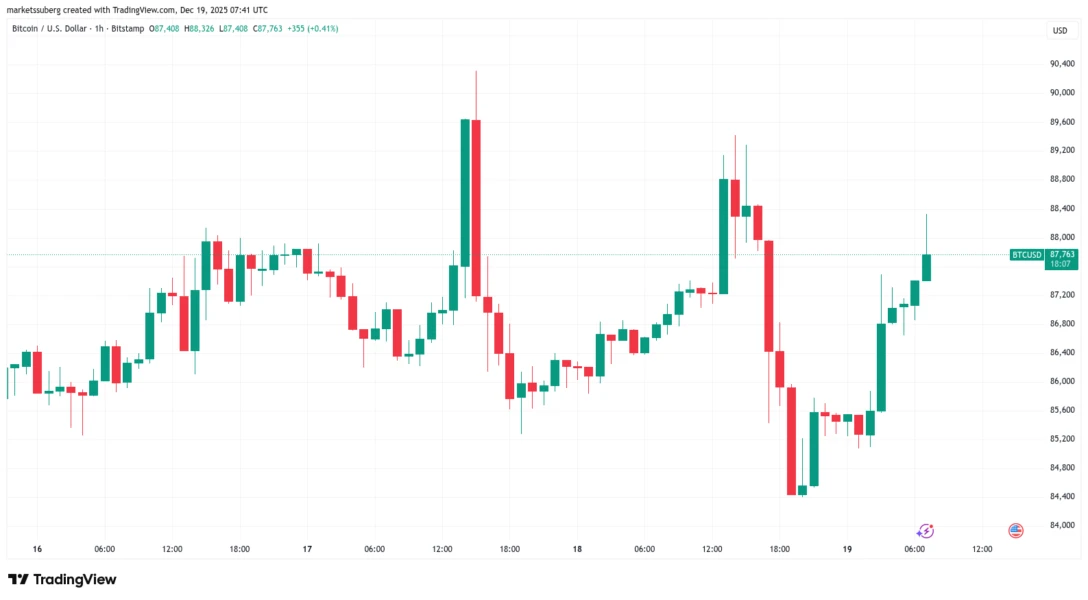
Bitcoin staged a notable rebound following Japan’s decision to raise interest rates, a move that injected fresh volatility into global currency markets and reignited debate over the yen’s long-term trajectory. As investors recalibrated positions, prominent market voices pointed to structural pressures that could still weaken the Japanese currency, even in a higher-rate environment. Among them, Arthur Hayes forecast a dramatic depreciation scenario, envisioning the U.S. dollar climbing toward 200 yen. The convergence of tighter Japanese monetary policy, currency speculation, and renewed interest in alternative assets has once again placed Bitcoin at the center of macro-driven market narratives.
Market Reaction to Japan’s Policy Shift
Japan’s rate hike marked a significant departure from years of ultra-loose monetary policy, immediately rippling through equity, currency, and digital asset markets. The yen initially strengthened as traders responded to the signal of tighter conditions, while risk assets experienced short-term turbulence.
Bitcoin, often sensitive to macroeconomic inflection points, initially wavered before recovering ground. The rebound reflected renewed demand from investors seeking assets perceived as hedges against currency instability and long-term monetary uncertainty.
Bitcoin’s Resilience in a Volatile Macro Environment
The recovery in Bitcoin prices underscores its evolving role within global portfolios. While still subject to sharp swings, the digital asset has increasingly responded to macroeconomic signals rather than purely crypto-native developments.
Market participants interpreted Japan’s policy move as a reminder that even incremental shifts by major central banks can expose structural weaknesses in fiat systems. In that context, Bitcoin’s bounce was less a speculative surge and more a recalibration tied to broader currency dynamics.
Arthur Hayes and the Yen Outlook
Adding fuel to the debate, Arthur Hayes offered a stark assessment of the yen’s long-term prospects. Despite the rate hike, Hayes argued that Japan’s structural challenges—ranging from debt dynamics to capital flows—could overwhelm policy tightening, pushing the dollar toward the 200-yen level over time.
Such a scenario would represent a profound depreciation of the Japanese currency and a major realignment in foreign exchange markets. While the projection is aggressive, it has resonated with traders who view Japan’s policy shift as too limited to reverse decades-long pressures.
Currency Pressure and the Case for Alternative Assets
Speculation around a sharply weaker yen has broader implications beyond Japan. A sustained move toward 200 yen per dollar would likely amplify global currency volatility, affecting trade balances, capital allocation, and investor risk appetite.
In that environment, assets outside the traditional monetary system—such as Bitcoin—stand to benefit from renewed attention. Advocates argue that fixed-supply digital assets gain appeal when confidence in fiat currencies is tested, particularly during periods of policy transition.
Investor Sentiment and Forward Risks
Despite Bitcoin’s rebound, uncertainty remains elevated. Central bank actions, geopolitical factors, and shifting interest-rate expectations continue to shape market sentiment. Japan’s rate hike may be the beginning of a gradual normalization, but investors remain skeptical about its ability to materially strengthen the yen.
For Bitcoin, the episode reinforces its sensitivity to macro narratives and its growing entanglement with global financial discourse. Short-term volatility is likely to persist, but the underlying theme of currency debasement versus alternative stores of value remains firmly in focus.
Conclusion
Bitcoin’s rebound following Japan’s rate hike highlights the complex interplay between monetary policy, currency markets, and digital assets. As bold forecasts of a dollar reaching 200 yen capture investor attention, the debate has shifted from short-term price moves to longer-term structural questions. Whether or not such extreme currency scenarios materialize, the episode underscores why Bitcoin continues to feature prominently in discussions about financial resilience in an era of global monetary transition.
About Author

