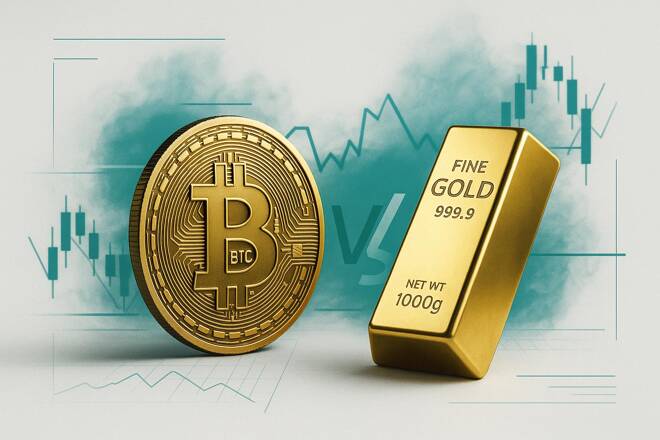
Escalating tensions surrounding Iran have injected fresh volatility into global financial markets, yet the cryptocurrency sector is responding in an unexpected way. Rather than retreating, digital asset platforms are witnessing heightened activity in tokenized oil and gold markets that trade around the clock. Investors are increasingly turning to blockchain-based commodities to hedge geopolitical exposure without waiting for traditional exchanges to open. This structural advantage — continuous trading, borderless access and rapid settlement — is reshaping how capital reacts to crisis. As conflict risk reverberates through energy and bullion prices, crypto infrastructure is emerging as a parallel risk-management arena.
Geopolitical Risk and Market Psychology
Periods of geopolitical uncertainty historically trigger a predictable chain reaction: crude oil prices spike on supply concerns, gold rallies as a safe-haven asset and equity markets turn defensive. Heightened tensions involving Iran — a critical player in global energy supply chains — have once again amplified these dynamics.
Oil benchmarks have experienced sharp intraday swings, reflecting fears of supply disruptions through key shipping corridors. Meanwhile, gold has attracted renewed demand as investors seek insulation from potential macroeconomic fallout. In traditional markets, however, access to these hedging instruments is confined to exchange hours and intermediated systems.
Cryptocurrency markets operate without such constraints. Trading never pauses. That structural distinction is proving significant during moments of rapid geopolitical escalation.
The Rise of Tokenized Commodities
Blockchain-based platforms now offer tokenized versions of oil and gold, allowing investors to gain price exposure in real time. These digital representations are typically backed by physical reserves or derivative structures designed to mirror spot prices.
Unlike futures contracts traded on regulated exchanges, tokenized commodities can be bought and sold 24 hours a day, seven days a week. This uninterrupted liquidity allows investors to respond instantly to breaking developments, whether they occur during Asian trading hours or over a weekend.
The appeal is straightforward: when headlines move faster than traditional markets can react, capital seeks venues that remain open. In recent weeks, volumes in tokenized oil and gold instruments have risen as traders recalibrate portfolios in response to Middle East risk.
Continuous Trading as a Strategic Hedge
The defining feature of crypto markets — perpetual accessibility — is evolving from novelty to strategic advantage. During prior geopolitical crises, price gaps often emerged between market close and reopen, exposing investors to overnight risk.
Digital commodity tokens mitigate that exposure. If oil prices surge at midnight due to military developments, traders can immediately adjust positions rather than waiting for the next session.
This immediacy enhances hedging precision. Portfolio managers holding digital assets can rebalance into tokenized gold without converting to fiat or navigating banking rails. Settlement occurs on-chain, typically within minutes.
The result is a parallel hedging ecosystem operating alongside traditional finance but untethered from its time constraints.
Energy Volatility and Inflation Expectations
Conflict involving Iran carries implications beyond oil supply. Sustained energy price increases feed into inflation expectations, influencing central bank policy and sovereign bond yields. Investors therefore view crude oil not merely as a commodity but as a macroeconomic barometer.
Gold’s parallel rally reflects similar concerns. Historically perceived as a store of value during currency debasement or geopolitical instability, bullion tends to strengthen when uncertainty rises.
Tokenized exposure to both assets allows crypto-native traders to express macro views without exiting the digital asset universe. In effect, blockchain platforms are replicating functions traditionally reserved for commodities exchanges and bullion markets.
Market Resilience and Capital Rotation
Despite heightened geopolitical tension, the broader cryptocurrency market has not exhibited systemic panic. Instead, capital appears to be rotating within the ecosystem — from speculative tokens toward defensive digital instruments tied to real-world assets.
This internal capital migration suggests increasing market sophistication. Rather than liquidating entirely, participants are hedging selectively. That behavior mirrors mature financial systems, where investors adjust exposure rather than abandon markets outright.
It also signals confidence in the underlying infrastructure. For tokenized commodities to function as credible hedges, participants must trust custody frameworks, collateral transparency and price tracking mechanisms.
Structural Implications for Global Finance
The convergence of geopolitics and decentralized finance underscores a deeper shift. Blockchain networks are no longer confined to speculative trading. They are evolving into alternative liquidity venues capable of absorbing macroeconomic shocks.
While traditional exchanges remain dominant in absolute scale, crypto markets offer three differentiators:
Continuous global access
Rapid settlement without intermediaries
Programmable financial instruments
In volatile environments, these attributes attract capital seeking flexibility and speed.
Conclusion
Geopolitical risk surrounding Iran has once again demonstrated how quickly energy and precious metals markets can reprice. Yet this episode also highlights a structural transformation in global finance. Around-the-clock crypto trading in tokenized oil and gold is providing investors with immediate hedging tools previously unavailable outside conventional exchange hours.
As geopolitical uncertainty persists, the ability to reposition capital in real time may prove invaluable. The digital asset ecosystem, once viewed primarily as speculative terrain, is increasingly functioning as a responsive risk-management infrastructure — one that operates without closing bells or geographic boundaries.
About Author

