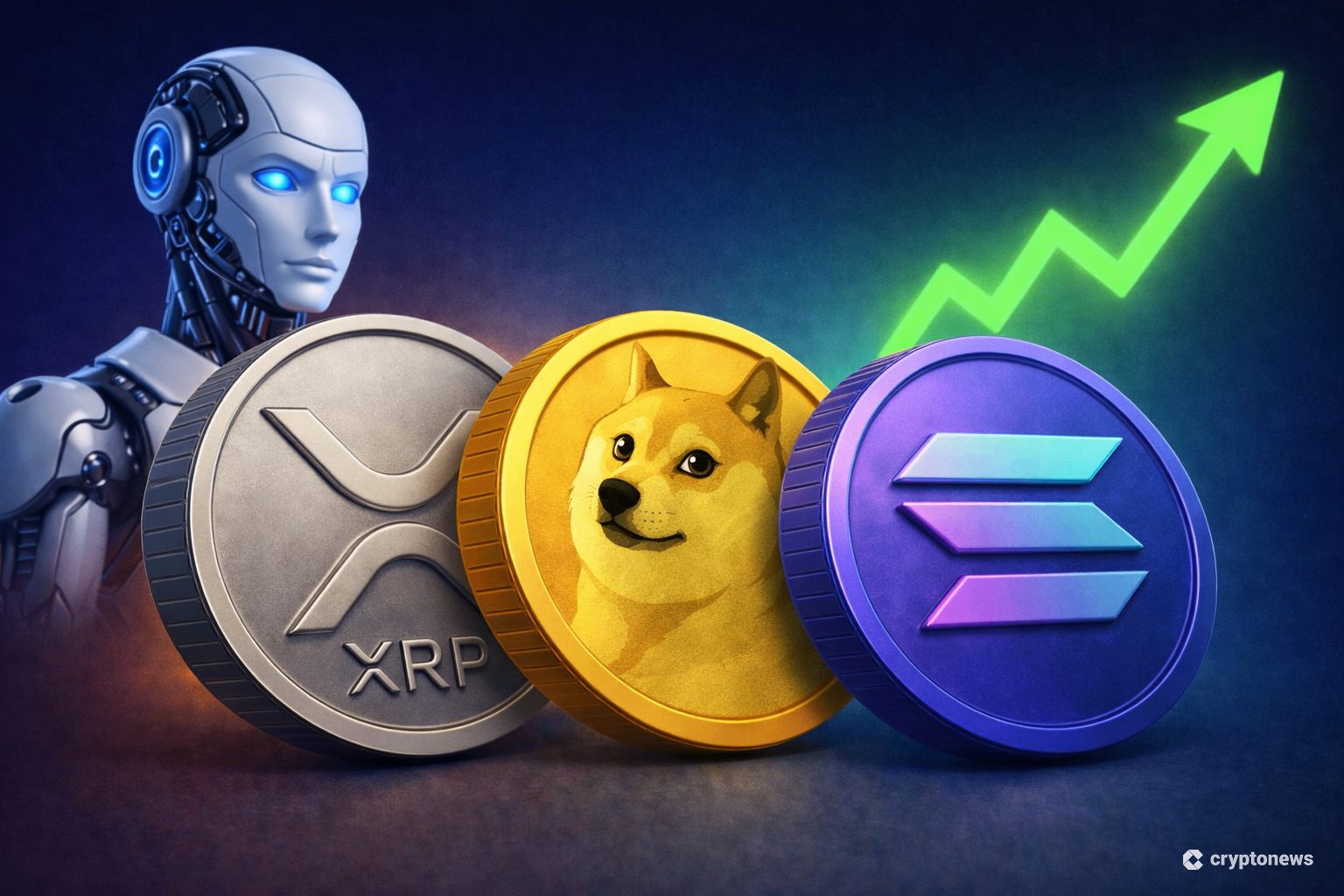
Determining which cryptocurrency is “most profitable” at any given moment depends on timeframe, volatility, entry price and risk tolerance. Bitcoin and Ethereum remain dominant in market capitalization and institutional adoption, while Solana and XRP have gained traction through speed and cross-border payment narratives. Dogecoin continues to trade largely on sentiment and speculative momentum. Short-term profitability often favors higher-volatility tokens, whereas long-term returns have historically leaned toward established assets. In 2026’s evolving digital asset market, profitability is less about brand recognition and more about timing, liquidity cycles, regulatory developments and macroeconomic sentiment influencing capital flows.
Understanding Profitability in Crypto Markets
Profitability in cryptocurrency markets cannot be assessed in isolation. Returns depend on three primary variables: entry price, holding period and volatility exposure. Unlike dividend-paying equities or interest-bearing bonds, cryptocurrencies generate returns primarily through price appreciation.
Digital assets operate in a high-liquidity, sentiment-driven environment. Rapid price fluctuations create opportunities for short-term traders, while long-term investors typically prioritize network strength, adoption and institutional participation.
The five major cryptocurrencies most frequently compared are:
Bitcoin
Ethereum
XRP
Solana
Dogecoin
Each carries a distinct investment profile.
Bitcoin: Institutional Benchmark and Store-of-Value Narrative
Bitcoin remains the largest cryptocurrency by market capitalization and is widely viewed as digital gold. Institutional adoption, exchange-traded products and treasury allocations have strengthened its position as a macro hedge.
Profitability in Bitcoin tends to be more stable relative to smaller tokens. While volatility remains significant compared to traditional assets, Bitcoin’s price swings are generally less extreme than mid-cap altcoins.
For long-term investors, Bitcoin historically has delivered strong multi-year returns, though short-term gains may be less dramatic compared to emerging tokens.
Ethereum: Smart Contract Dominance
Ethereum functions as a programmable blockchain supporting decentralized applications, decentralized finance and tokenized assets. Its utility extends beyond currency use, embedding it deeply within the digital asset ecosystem.
Profitability in Ethereum is often linked to network activity, staking yields and ecosystem growth. During bullish market cycles, Ethereum frequently outperforms Bitcoin on a percentage basis, though it may also experience sharper drawdowns during corrections.
Investors typically view Ethereum as a growth-oriented asset with strong infrastructure fundamentals.
XRP: Payments-Focused Volatility
XRP’s investment case centers on cross-border payments and institutional transaction efficiency. Its profitability has historically been influenced by regulatory developments and partnership announcements.
Because XRP trades heavily on news cycles, short-term traders often capitalize on rapid price swings. However, regulatory uncertainty in some jurisdictions has contributed to periodic volatility spikes.
Profit potential in XRP is therefore closely tied to legal clarity and adoption progress.
Solana: High-Speed Ecosystem Expansion
Solana has attracted attention for its high transaction throughput and low fees. Its ecosystem growth in decentralized applications and non-fungible tokens has driven strong rally phases in previous market cycles.
From a profitability standpoint, Solana has demonstrated higher beta characteristics — meaning larger upward and downward price movements relative to Bitcoin.
For investors comfortable with elevated volatility, Solana can present significant upside during bullish sentiment waves.
Dogecoin: Sentiment-Driven Speculation
Dogecoin remains largely community-driven, with price movements frequently influenced by social media activity and endorsements, including commentary from figures such as Elon Musk.
Profitability in Dogecoin is typically short-term and momentum-based rather than fundamentally anchored. While dramatic rallies have occurred, the asset’s speculative nature introduces substantial risk.
Investors considering Dogecoin must accept heightened volatility and sentiment dependency.
Which Is Most Profitable “Right Now”?
The honest answer is that profitability “at the moment” depends on recent price performance and individual entry points. In short-term trading environments, higher-volatility tokens like Solana or Dogecoin may deliver larger percentage swings. In more stable market conditions, Bitcoin and Ethereum often provide steadier risk-adjusted returns.
XRP’s performance tends to hinge on regulatory news, while Solana’s movements often correlate with ecosystem activity and liquidity cycles.
Risk-Adjusted Perspective
Professional investors evaluate not only raw returns but risk-adjusted returns. Metrics such as drawdown percentage, volatility index and liquidity depth matter significantly.
A token that rises 40 percent but falls 50 percent shortly after may be less attractive than one delivering consistent 15 percent gains with lower downside risk.
Diversification across digital assets can reduce concentration risk, though it does not eliminate market-wide volatility exposure.
Strategic Conclusion
In 2026, no single cryptocurrency can be declared universally “most profitable.” Market cycles, macroeconomic shifts, regulatory developments and technological adoption all influence short-term and long-term performance.
Bitcoin and Ethereum generally represent foundational exposure. Solana and XRP offer higher growth potential with elevated risk. Dogecoin remains primarily speculative.
For finance-focused investors, disciplined portfolio allocation, continuous market monitoring and clear risk tolerance thresholds are more important than chasing the latest rally. In cryptocurrency markets, timing and strategy — not popularity — determine profitability.
About Author
