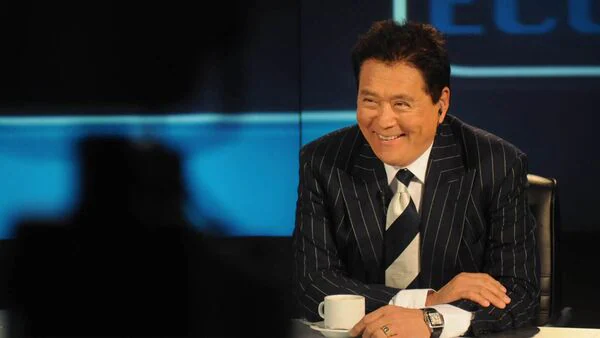
Investor and financial author Robert Kiyosaki continues to accumulate gold, silver, and Bitcoin, signaling a strong preference for hard assets over traditional fiat currencies. Known for his long-standing warnings about inflation and monetary instability, Kiyosaki argues that asset price fluctuations are less important than long-term protection against currency devaluation. His strategy reflects a broader movement among investors seeking alternatives to conventional savings instruments during periods of economic uncertainty. By emphasizing tangible and decentralized stores of value, Kiyosaki’s approach highlights growing skepticism toward central banking policies and underscores a shift in how some market participants define financial security.
A Philosophy Rooted in Monetary Skepticism
Robert Kiyosaki has built his financial philosophy around the belief that traditional paper currencies steadily lose value due to inflation and expansionary monetary policies. Rather than focusing on short-term price movements, he emphasizes the purchasing power of assets over time. This perspective drives his continued investment in gold, silver, and Bitcoin — assets he views as shields against systemic financial risk.
Kiyosaki’s stance resonates with a segment of investors concerned about rising government debt levels, persistent inflationary pressures, and long-term currency debasement.
Gold and Silver as Historical Safe Havens
Precious metals have long been regarded as stores of value during economic turbulence. Gold, in particular, has served as a hedge against inflation and geopolitical instability for centuries. Silver, while more volatile, benefits from both monetary appeal and industrial demand, giving it a dual role in investment portfolios.
Kiyosaki’s accumulation of these metals reflects a traditional wealth preservation strategy. Unlike fiat money, gold and silver cannot be printed, which supporters argue protects them from the dilution effects of monetary expansion.
Bitcoin’s Role in a Modern Portfolio
While gold and silver represent historical safe havens, Bitcoin offers a digital alternative rooted in decentralized technology. With a capped supply and independence from central banks, Bitcoin appeals to investors who value scarcity and resistance to policy-driven inflation.
Kiyosaki views Bitcoin as “digital gold,” a modern asset class that complements physical precious metals. Its volatility is often cited as a risk, but long-term proponents argue that its limited supply and growing institutional acceptance strengthen its role as a store of value.
Ignoring Price, Focusing on Quantity
Kiyosaki’s assertion that he does not focus on prices reflects a cost-averaging mindset. By steadily accumulating assets regardless of short-term fluctuations, he prioritizes long-term positioning over market timing. This strategy mirrors approaches used by investors who believe macroeconomic trends outweigh temporary volatility.
Such a philosophy assumes that currency purchasing power will erode over time, making ownership of scarce assets more important than entry price precision.
Broader Market Implications
Kiyosaki’s views align with a broader global trend in which investors diversify beyond traditional stocks and bonds. Inflation uncertainty, geopolitical tensions, and evolving financial systems have prompted renewed interest in alternative assets.
However, financial advisors often caution that commodities and cryptocurrencies can experience significant volatility. While they may serve as hedges, they also carry risks that require careful portfolio balance.
Conclusion
Robert Kiyosaki’s continued buying of gold, silver, and Bitcoin underscores a conviction that long-term wealth preservation outweighs short-term price concerns. His strategy reflects deep skepticism toward fiat currency stability and confidence in scarce, non-government-controlled assets. Whether one agrees with his outlook or not, his approach highlights a growing investor mindset focused on resilience, diversification, and protection against systemic financial uncertainty in an evolving global economy.
About Author
