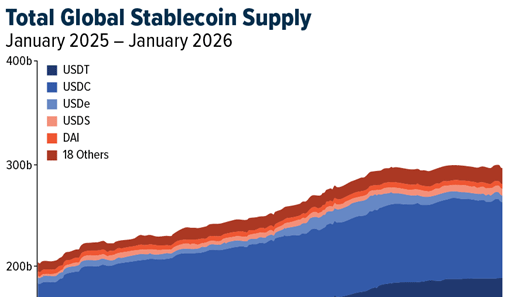
Stablecoins, once viewed as a niche tool for crypto traders, are now emerging as a critical layer of the global digital financial system. Designed to maintain price stability by pegging their value to traditional currencies, these blockchain-based assets are increasingly used for payments, remittances, and decentralized finance. Yet questions remain about regulation, reserve transparency, and systemic risk. As governments tighten oversight and institutions explore adoption, stablecoins stand at a pivotal moment. Their evolution from experimental tokens to financial infrastructure could reshape cross-border transactions, liquidity flows, and the competitive landscape between traditional banking systems and decentralized networks.
What Are Stablecoins and Why They Matter
Stablecoins are digital tokens engineered to minimize volatility by linking their value to external assets such as the U.S. dollar or other fiat currencies. Unlike traditional cryptocurrencies that experience sharp price swings, stablecoins aim to provide predictability — a key requirement for payments and financial contracts.
Their utility extends beyond trading. Businesses increasingly use stablecoins for cross-border settlements, while individuals rely on them to hedge against local currency instability. This functional expansion signals a shift from speculative experimentation toward practical financial application.
Adoption Trends Signal Growing Utility
Transaction volumes involving stablecoins have surged in recent years, often rivaling traditional payment networks during peak periods. Much of this activity stems from decentralized finance platforms, where stablecoins serve as collateral, liquidity pairs, and yield-generating instruments.
Meanwhile, fintech firms and payment processors are exploring integrations that could allow stablecoin-based transfers to occur alongside conventional banking rails. These developments suggest stablecoins are transitioning into tools of financial efficiency rather than purely crypto-native instruments.
Regulatory Scrutiny Intensifies
As adoption accelerates, regulatory oversight is becoming more structured. Policymakers are increasingly concerned about reserve backing, liquidity risks, and consumer protection. Proposed frameworks in major economies aim to ensure issuers maintain transparent, high-quality reserves and adhere to financial compliance standards.
Such regulation could legitimize the sector by reducing counterparty risk, though it may also raise operational costs and limit smaller entrants. The regulatory path chosen will play a decisive role in determining whether stablecoins integrate with or compete against traditional banking systems.
Strengths, Weaknesses, Opportunities and Threats
Strengths:
Stablecoins offer near-instant settlement, lower transaction fees, and global accessibility. They operate continuously without reliance on legacy banking hours, making them attractive for international commerce.
Weaknesses:
Centralization risks persist, as many stablecoins depend on single issuers holding off-chain reserves. Questions about transparency and asset quality have, at times, undermined market confidence.
Opportunities:
Institutional adoption, integration with payment networks, and use in emerging markets present significant growth potential. Stablecoins could also support programmable finance through smart contracts.
Threats:
Regulatory clampdowns, loss of reserve confidence, and competition from central bank digital currencies pose substantial risks to long-term expansion.
The Infrastructure Question
A key debate is whether stablecoins should be viewed as independent financial products or as infrastructure components within a broader digital economy. Their programmability enables automated financial processes, from escrow services to interest-bearing accounts executed via code.
If infrastructure adoption continues, stablecoins may become as invisible yet essential as payment processors are today. Their success would then be measured not by price appreciation, but by transaction reliability and network integration.
Market Stability and Systemic Risk
Despite their promise, stablecoins introduce new systemic considerations. Large-scale redemptions during periods of stress could force issuers to liquidate reserves rapidly, potentially affecting short-term credit markets. Regulators and economists are examining safeguards to mitigate such contagion risks.
Transparency, real-time audits, and diversified reserve management are among the proposed solutions to ensure stability as usage grows.
From Experiment to Financial Rail?
Stablecoins appear to be moving steadily beyond their experimental origins. Their expanding role in payments, trading, and decentralized finance underscores their growing economic relevance. Yet scalability alone does not guarantee permanence.
Long-term success will depend on regulatory clarity, reserve integrity, and user trust. If these elements align, stablecoins may evolve into foundational components of global digital finance — bridging the gap between traditional monetary systems and blockchain-based innovation.
About Author
