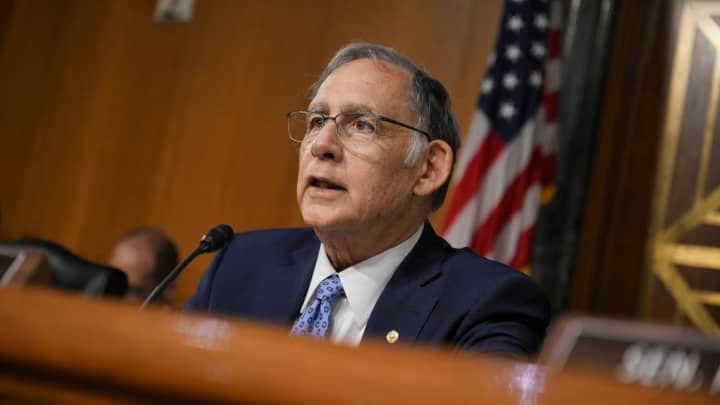
In a landmark development for cryptocurrency regulation in the United States, the Senate Agriculture Committee on Jan. 29 advanced the Digital Commodity Intermediaries Act by a narrow 12–11 party-line vote, marking the first time a crypto market-structure bill has cleared a Senate panel. The legislation aims to clarify regulatory authority over digital asset markets by empowering the Commodity Futures Trading Commission (CFTC) to oversee spot trading of digital commodities and establish customer-protection standards. While the move represents significant momentum toward federal digital-asset rules, deep partisan divides and unresolved issues — particularly around ethics, DeFi and securities classification — mean the bill still faces a challenging path to full Senate approval.
Committee Vote Marks Historic Progress
The Senate Agriculture Committee’s passage of the crypto bill, formally titled the Digital Commodity Intermediaries Act, stands as a historic legislative milestone. For the first time, comprehensive digital-asset market regulation has advanced beyond a Senate committee. The 12–11 vote, cast on strict party lines, underscores both the political complexity of crypto oversight and the growing urgency in Washington to address longstanding regulatory ambiguity.
Proponents highlighted the need for clear federal rules to govern trading platforms, intermediaries and digital-asset custodians — areas that have operated in a regulatory grey zone for years. Committee leaders stressed that defining regulatory boundaries is essential to protecting investors and fostering industry growth.
Key Provisions of the Bill
At the heart of the legislation is an expanded role for the CFTC, the agency historically charged with overseeing traditional commodity and derivatives markets. The bill would:
Grant the CFTC explicit authority over spot markets trading digital commodities such as Bitcoin and other non-security tokens.
Provide a legal definition for “digital commodities” and outline registration requirements for exchanges, brokers and custodians.
Introduce customer fund-segregation rules and conflict-of-interest safeguards to strengthen market integrity.
Supporters argue this clarity could reduce fraud and manipulation, enabling digital-asset markets to mature while offering protections similar to those in securities and futures markets.
Partisan Divide and Opposition Concerns
Despite advancing out of committee, the bill’s journey is far from complete, largely due to significant partisan resistance. All Democrats on the panel voted against it, citing concerns that the current text lacks crucial consumer protections and ethics provisions, including restrictions on federal officials profiting from crypto investments.
Senate Democrats also objected to the absence of robust language addressing decentralised finance (DeFi) and other emerging crypto segments where regulatory risk remains pronounced. Critics argue that without bipartisan buy-in and more comprehensive protections, the bill may falter in later stages.
Next Legislative Hurdles
After clearing the Agriculture Committee, the legislation must now be reconciled with actions in the Senate Banking Committee, which is considering complementary crypto regulatory proposals, particularly those relating to the Securities and Exchange Commission’s (SEC) jurisdiction and stablecoins. Only after both panels complete their review and integrate their versions can the bill advance to the full Senate for debate and a potential vote.
Adding to the complexity, previously passed House legislation on digital asset clarity will need to be aligned with the Senate’s approach, likely through a conference committee process.
Implications for the Digital Asset Industry
For the crypto sector, the committee’s action is a meaningful step toward federal regulatory clarity — long seen as critical for institutional participation, exchange licencing and broader integration with traditional finance. A clear framework could reduce legal uncertainty, attract capital, and position the U.S. as a more competitive jurisdiction for digital-asset innovation.
However, industry participants and legal analysts caution that substantial legislative work remains. Issues such as the interplay between CFTC and SEC authority, consumer safeguards in DeFi, and stablecoin regulatory treatment are unresolved and could shape the final contours of U.S. digital-asset policy.
Conclusion
The Senate Agriculture Committee’s passage of the Digital Commodity Intermediaries Act represents historic momentum in the bipartisan quest for crypto regulation. By defining the CFTC’s role and beginning to knit together a federal oversight framework, lawmakers have moved beyond years of regulatory inertia. Yet the narrow vote and ongoing disagreements underscore the challenges ahead. As the bill navigates further committee review and negotiations, its evolution will be a key barometer of U.S. policy toward one of the most dynamic sectors of the global financial ecosystem.
About Author
