Crypto’s ‘Digital Gold’ Narrative Faces Scrutiny as Investors Return to Precious Metals
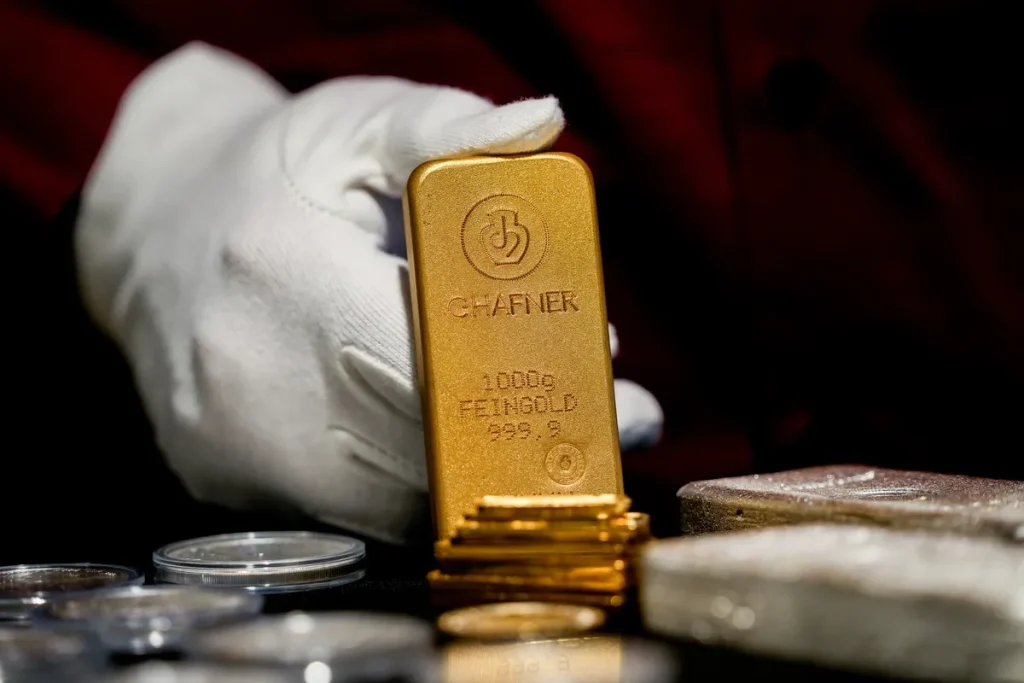
The long-promoted comparison between cryptocurrencies and gold is being re-evaluated as investors increasingly shift capital back into traditional precious metals. Market volatility, shifting macroeconomic conditions and diverging performance patterns have challenged the perception of digital assets as reliable stores of value during periods of uncertainty. While cryptocurrencies remain popular among speculative traders and technology-focused investors, gold and silver are regaining appeal as defensive allocations amid inflation concerns and geopolitical risk. The reassessment highlights a broader realignment in portfolio strategies, where tangible assets with historical stability are competing once again with digital alternatives for safe-haven status.
Safe-Haven Debate Resurfaces
For years, cryptocurrencies — particularly Bitcoin — were widely described as “digital gold,” a decentralized asset purported to offer protection against inflation and currency debasement. However, recent market cycles have revealed performance patterns that diverge sharply from traditional safe-haven behavior.
During episodes of financial stress, digital assets have frequently moved in tandem with high-growth equities rather than acting as a stabilizing force. This correlation has prompted investors to question whether crypto can reliably serve as a hedge in risk-off environments.
Metals Regain Portfolio Prominence
Gold and silver prices have drawn renewed attention as investors rotate toward assets with established track records during economic turbulence. Unlike cryptocurrencies, precious metals possess centuries of historical credibility as stores of value and are widely held by central banks as part of sovereign reserves.
Institutional allocators, wealth managers and conservative investors are reassessing exposure levels, particularly as global growth uncertainty, currency fluctuations and geopolitical tensions shape capital flows. Exchange-traded products backed by physical bullion have also seen increased interest, reflecting demand for tangible asset exposure.
Volatility Undermines the Hedge Thesis
One of the core arguments behind the “digital gold” thesis was Bitcoin’s capped supply and independence from monetary authorities. Yet extreme price swings have complicated its use as a defensive allocation.
Periods of rapid appreciation are often followed by steep drawdowns, making it difficult for risk-averse investors to rely on crypto as a stable store of value. By contrast, gold’s price movements tend to be more gradual, aligning more closely with its role as a portfolio stabilizer rather than a high-beta growth instrument.
Macro Forces Drive Divergence
Rising interest rates and tightening global liquidity have further differentiated digital assets from precious metals. Cryptocurrencies, which thrived during ultra-loose monetary conditions, have faced headwinds as borrowing costs increase and speculative capital retreats.
Gold, on the other hand, often benefits from uncertainty surrounding monetary policy, fiscal sustainability and currency strength. In environments where real yields stabilize or decline, demand for non-yielding assets such as bullion can increase, reinforcing its defensive appeal.
Not a Zero-Sum Shift
Despite the renewed interest in metals, cryptocurrencies continue to attract investors focused on technological innovation, decentralized finance and long-term digital infrastructure growth. For many portfolios, the decision is not a binary choice between gold and crypto but rather a recalibration of allocation weights.
Advisers note that while digital assets may retain a role as high-risk, high-reward components, their characterization as direct substitutes for gold appears increasingly overstated.
A More Nuanced View Emerges
The evolving market environment suggests that cryptocurrencies and precious metals serve fundamentally different purposes. Gold’s strength lies in stability and crisis resilience, while crypto’s appeal remains tied to innovation, network growth and speculative opportunity.
As investors refine their understanding of these distinctions, the simplistic “digital gold” label is giving way to a more nuanced framework. Portfolio construction decisions are increasingly grounded in risk tolerance, liquidity needs and macro outlook rather than marketing narratives.
In the current cycle, the rebalancing toward traditional metals underscores a broader shift in sentiment: when uncertainty rises, history and tangibility still carry significant weight in global financial markets.
About Author