US-Backed Body Explores Dollar-Pegged Stablecoin to Revive Gaza’s Postwar Economy
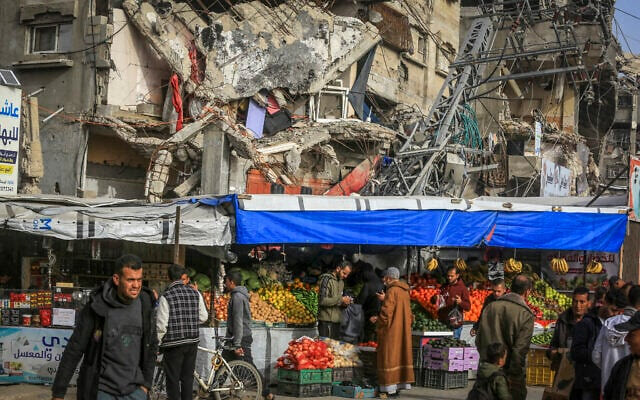
A US-led reconstruction authority overseeing postwar Gaza is examining the creation of a dollar-pegged stablecoin aimed at restoring liquidity and stabilizing economic activity in the enclave. The proposed cryptocurrency would function as a digital payment instrument tied to the US dollar, offering price stability in a region grappling with cash shortages and financial disruption. The initiative is reportedly being advanced by Israeli tech entrepreneur Liran Tancman in coordination with US officials and Palestinian technocrats. If implemented, the project could mark a significant experiment in leveraging blockchain infrastructure to address post-conflict economic recovery.
A Digital Currency Proposal for a Fragile Economy
Officials associated with the Board of Peace, a US-backed administrative body tasked with overseeing Gaza’s postwar reconstruction, are exploring the development of a stablecoin designed to facilitate commerce and restore monetary stability.
The proposed digital asset would be pegged to the US dollar, a structure commonly used in stablecoins to reduce volatility. Unlike cryptocurrencies such as Bitcoin, whose prices fluctuate sharply, a dollar-backed stablecoin aims to maintain a consistent value relative to fiat currency.
The initiative comes at a time when liquidity constraints have intensified in Gaza, where physical cash circulation has reportedly declined and access to conventional banking infrastructure remains limited.
Leadership and Institutional Coordination
According to individuals familiar with the discussions, the project is being spearheaded by Liran Tancman, an Israeli technology entrepreneur and former intelligence corps veteran. Tancman is serving as an unpaid adviser to the Board of Peace and has reportedly engaged with senior US officials on Gaza-related economic initiatives over the past year.
The effort is said to involve members of the National Committee for the Administration of Gaza, a Palestinian technocratic body operating under the Board of Peace framework. Also connected to the initiative is Nickolay Mladenov, the former UN official who now serves as the high representative for the territory under the Board of Peace structure.
The multi-layered coordination reflects the political and administrative complexity surrounding Gaza’s governance and reconstruction planning.
Why a Stablecoin?
Stablecoins are designed to mitigate the volatility that characterizes most cryptocurrencies. By anchoring value to a reserve asset such as the US dollar, they provide predictability in transactions and can function as digital substitutes for cash.
In post-conflict economies, where traditional banking systems may be impaired and local currency availability constrained, a blockchain-based payment instrument could theoretically facilitate peer-to-peer transfers, salary disbursements and aid distribution with greater efficiency.
Advocates argue that a stablecoin could reduce dependency on physical currency flows and improve transparency in aid allocation. Transactions recorded on a blockchain ledger can enhance traceability, potentially reducing corruption and leakages in reconstruction funds.
Economic and Political Considerations
While technologically feasible, the proposal faces significant operational and geopolitical challenges. Monetary systems are deeply intertwined with sovereignty and regulatory oversight. Introducing a dollar-pegged digital currency into Gaza would require careful alignment with regional financial authorities and international stakeholders.
Questions also remain regarding reserve backing, custodial arrangements and compliance with anti-money laundering standards. Ensuring adequate dollar reserves to maintain the peg would be central to maintaining confidence in the currency.
Moreover, digital infrastructure limitations and varying levels of financial literacy could affect adoption rates among Gaza’s population.
Broader Implications for Post-Conflict Reconstruction
The stablecoin initiative reflects a broader trend of integrating fintech solutions into humanitarian and reconstruction efforts. Digital payment systems have increasingly been deployed in crisis settings to distribute aid more efficiently and securely.
If successful, the Gaza stablecoin could serve as a pilot model for blockchain-enabled economic stabilization in fragile states. However, failure to establish governance clarity and robust technical safeguards could undermine trust in the system.
The project therefore represents both an economic experiment and a geopolitical test case for the use of digital assets in postwar environments.
Conclusion: Innovation Amid Uncertainty
The exploration of a US dollar-pegged stablecoin for Gaza underscores the evolving intersection of technology, finance and reconstruction policy. At a time when traditional monetary mechanisms face constraints, digital solutions are being considered as tools for economic revival.
Whether the initiative advances beyond the conceptual stage will depend on political consensus, regulatory coordination and operational execution. For now, the proposal highlights an emerging paradigm: the use of blockchain-based financial instruments not merely as speculative assets, but as instruments of economic recovery in regions striving to rebuild from conflict.
About Author