Bitcoin vs. XRP: A Decade-Long Investment Debate in a Maturing Crypto Market
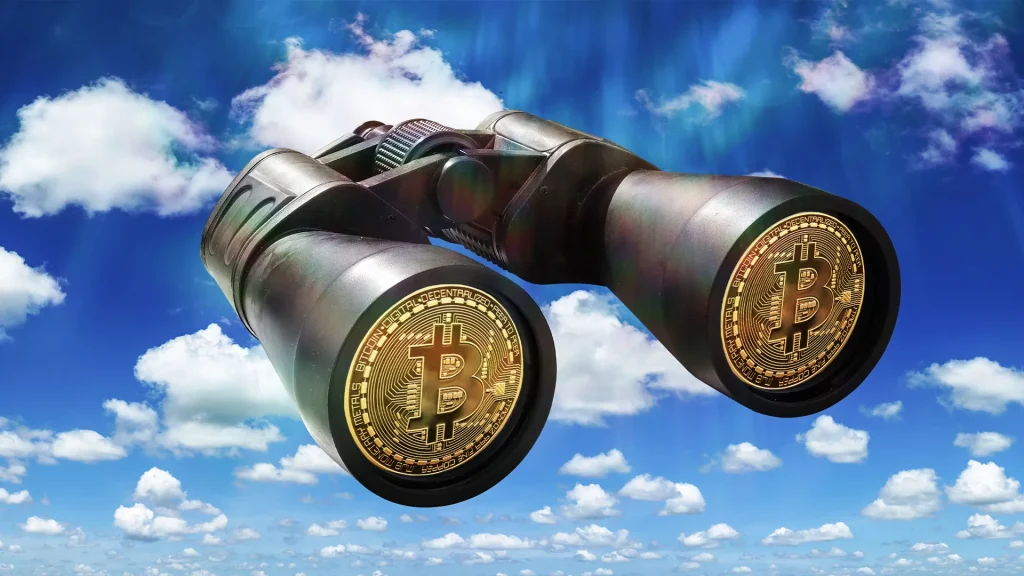
As cryptocurrency markets evolve beyond speculative fervor into structured financial ecosystems, investors face a critical strategic choice: prioritize Bitcoin’s entrenched store-of-value thesis or wager on XRP’s expanding institutional utility. Bitcoin’s fixed supply and market dominance offer structural stability, while XRP’s future hinges on adoption across payments, tokenization, and financial infrastructure. Over the next decade, their trajectories could diverge significantly. Bitcoin’s investment narrative remains largely intact, whereas XRP must execute and scale to justify long-term appreciation. Both assets present opportunity, but risk profiles differ markedly, demanding disciplined evaluation from serious capital allocators.
Market Context: Divergent Philosophies in Digital Assets
Cryptocurrency markets are no longer defined solely by volatility. They are increasingly shaped by distinct economic philosophies embedded within individual blockchain protocols.
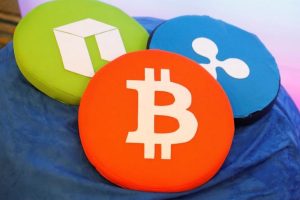
Bitcoin and XRP exemplify two fundamentally different approaches to value creation. One aspires to function as digital gold — a hedge against monetary debasement. The other seeks relevance as infrastructure within institutional financial systems.
Understanding their divergence is essential for investors contemplating a 10-year holding period.
Bitcoin: Scarcity as Strategy
Bitcoin’s long-term investment case is anchored in monetary discipline. Its maximum supply remains permanently capped at 21 million coins, with approximately 20 million already in circulation. Issuance is programmatically reduced through periodic halving events, reinforcing scarcity dynamics.
This fixed-supply architecture creates a structural bias toward price appreciation over extended horizons, provided demand persists. Unlike traditional fiat currencies, Bitcoin’s monetary policy cannot be altered by political decision or central authority.
Over the past decade, Bitcoin has endured multiple drawdowns exceeding 80%, yet each cycle ultimately reinforced its dominance. Its position as the largest cryptocurrency by market capitalization makes it the benchmark for the broader digital asset sector.
Institutional adoption, custodial infrastructure, and integration into regulated financial products have further solidified its standing. Importantly, Bitcoin does not require dramatic evolution to sustain its thesis. Its core functionality — decentralized scarcity — remains its primary competitive advantage.
Resilience Through Simplicity
Bitcoin’s strength lies in minimalism. It is not attempting to dominate payments, tokenize real-world assets, or replicate banking systems. Its investment case depends on trust, security, and decentralization.
Over time, assets that maintain narrative clarity often outperform those that rely on continuous innovation to justify valuation. Bitcoin’s durability stems from its simplicity.
If digital assets continue to mature as a recognized asset class, Bitcoin is positioned to remain the foundational reserve asset within the ecosystem.
XRP: Utility as Ambition
XRP operates within a more complex competitive landscape. Its success is not preordained by scarcity alone. Instead, it depends on adoption across real-world financial use cases.
For XRP to generate sustained appreciation over the next decade, the XRP Ledger must expand meaningfully across three dimensions:
Cross-border payments and settlement infrastructure
Tokenized asset issuance and management
Institutional financial tooling and liquidity solutions
Unlike Bitcoin, which benefits from passive demand as a store of value, XRP must demonstrate ongoing utility growth.
The network has made measurable inroads in cross-border payments, particularly in reducing friction and transaction costs. However, it competes in a crowded field that includes emerging blockchain platforms, central bank digital currencies, and evolving fintech solutions.
Competitive Pressures and Strategic Execution
The moat surrounding XRP is comparatively narrower than Bitcoin’s. While Bitcoin’s decentralized architecture is widely replicated but rarely surpassed in security and brand recognition, XRP faces technological and regulatory competition.
To sustain momentum, XRP must adapt to regulatory frameworks, secure institutional partnerships, and continue expanding its ecosystem. That requires operational execution rather than passive scarcity.
If adoption accelerates — particularly within institutional finance — XRP’s valuation could benefit disproportionately. However, the dependency on external partnerships introduces execution risk absent in Bitcoin’s model.
Volatility and Risk Considerations
Both assets remain volatile. Bitcoin has historically experienced deep cyclical corrections without undermining its long-term thesis. XRP, by contrast, has demonstrated periods of rapid appreciation followed by extended stagnation, reflecting the market’s sensitivity to adoption milestones.
For long-term investors, the distinction is subtle but significant:
Bitcoin’s primary risk is macroeconomic and sentiment-driven.
XRP’s primary risk is adoption-driven and competitive.
Diversification within digital assets may mitigate single-protocol risk, yet allocation decisions should reflect conviction about each asset’s structural durability.
A Decade Ahead: Structural vs. Adaptive Value
Projecting forward to 2036 requires disciplined analysis rather than speculative enthusiasm.
Bitcoin’s fundamental characteristics are unlikely to change materially. Its capped supply, decentralized governance, and established brand recognition provide continuity. In financial markets, continuity often translates into investor confidence.
XRP, meanwhile, must evolve. Its feature set will need expansion, integration, and measurable institutional uptake. If successful, it could capture significant value within financial infrastructure. If not, stagnation remains a possibility.
The contrast is clear: Bitcoin represents structural value preservation, while XRP represents adaptive value creation.
Portfolio Implications for Long-Term Investors
Investors evaluating a 10-year horizon must weigh philosophical alignment as much as financial metrics.
Bitcoin offers:
Monetary predictability
Market leadership
Institutional acceptance
XRP offers:
Infrastructure utility
Institutional integration potential
Higher upside contingent on execution
Neither asset guarantees returns. Both could deliver strong performance under favorable conditions. The determining factor lies in the trajectory of digital asset adoption globally.
Conclusion: Different Games, Different Outcomes
Bitcoin and XRP are not competing for identical outcomes. They operate within separate strategic frameworks inside the broader cryptocurrency ecosystem.
Bitcoin’s future rests on its role as digital scarcity — a hedge, a reserve, and a benchmark asset. XRP’s future depends on embedding itself into the operational plumbing of finance.
For investors seeking long-term exposure, the decision is less about choosing a winner and more about understanding risk tolerance and conviction.
Over the next decade, one may outperform the other, but both will remain central to the evolving narrative of digital finance. The prudent approach is informed allocation grounded in structural analysis rather than short-term momentum.
About Author