Solana’s High-Speed Ambition: Scalability, Institutional Capital and the Battle for Blockchain Dominance
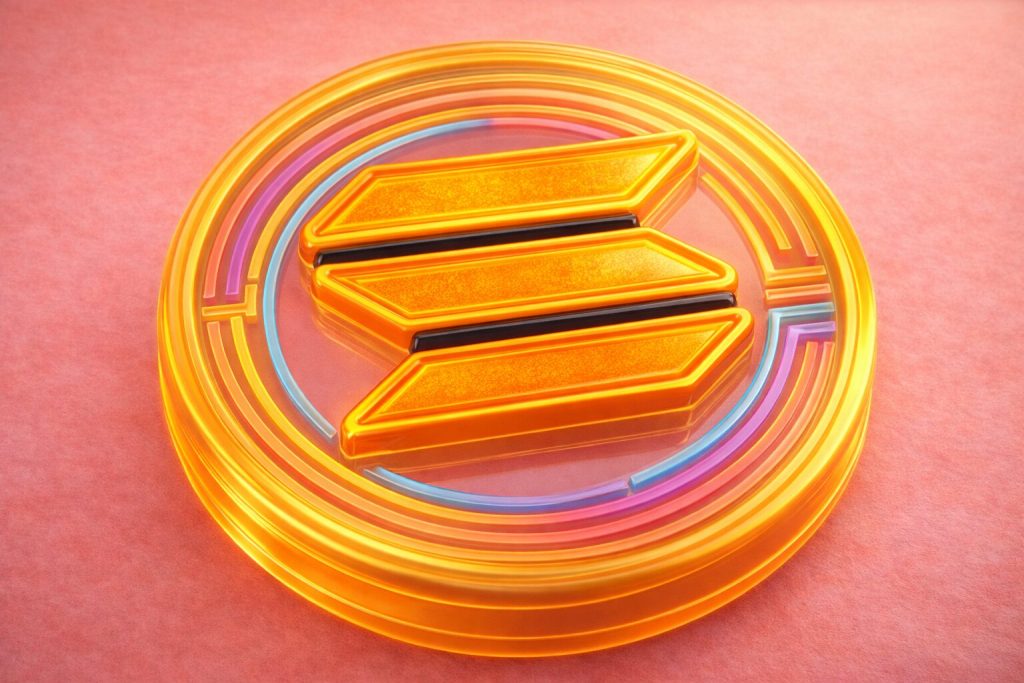
Solana has emerged as one of the most prominent high-performance blockchain networks, positioning itself as a scalable alternative to Ethereum. Designed to process thousands of transactions per second with low fees, Solana attracted substantial institutional capital and developer interest during peak market cycles. However, network outages and volatility have tested investor confidence. As decentralized finance, NFTs and Web3 applications demand faster infrastructure, Solana’s technical architecture offers compelling advantages. This article evaluates Solana’s scalability model, ecosystem expansion, risk factors and whether its high-speed design can deliver sustainable long-term leadership in an increasingly competitive blockchain landscape.
The Scalability Challenge in Blockchain
Blockchain networks historically struggle with scalability. As transaction volumes increase, congestion often leads to higher fees and slower confirmation times.
Solana was built to address this limitation directly. Its architecture integrates a unique timestamping mechanism known as Proof of History, combined with a high-throughput consensus model.
This design allows Solana to process significantly more transactions per second compared to earlier-generation networks like Ethereum.
Lower transaction costs enhance accessibility for retail users and developers alike.
Scalability is not merely a technical metric—it is central to economic viability.
Proof of History and Network Architecture
Proof of History functions as a cryptographic clock, enabling validators to sequence transactions efficiently without constant communication.
By reducing coordination overhead, the network achieves rapid settlement and high throughput.
Solana’s block times are measured in milliseconds, allowing decentralized applications to operate with near-instant responsiveness.
This performance profile makes Solana attractive for use cases such as decentralized exchanges, gaming and NFT marketplaces.
However, technical complexity increases operational risk.
High-performance systems require robust reliability.
Institutional Capital and Ecosystem Growth
During the cryptocurrency bull market, Solana attracted significant venture capital investment.
Funds backed decentralized finance protocols, NFT platforms and Web3 startups building on the network.
Institutional interest extended beyond speculative trading to infrastructure development.
Major digital asset exchanges expanded support for Solana-based tokens, enhancing liquidity and accessibility.
Developer activity surged, positioning Solana as one of the fastest-growing ecosystems by project count.
Capital inflows strengthened valuation but also raised expectations for consistent performance.
Network Outages and Reliability Concerns
Despite its speed, Solana has faced multiple network outages.
Periods of downtime disrupted decentralized applications and raised questions about resilience.
Critics argue that high throughput may come at the expense of decentralization and stability.
Reliability is crucial for institutional adoption. Financial infrastructure demands uninterrupted operation.
While upgrades have reduced outage frequency, reputational impact lingers.
Long-term credibility depends on demonstrating sustained uptime.
Performance alone is insufficient without stability.
Competition in the Smart Contract Arena
Solana competes directly with platforms such as Ethereum and Cardano, among others.
Each network emphasizes different trade-offs between decentralization, scalability and security.
Ethereum benefits from first-mover advantage and deep liquidity.
Solana differentiates itself through transaction speed and cost efficiency.
Market share ultimately depends on developer adoption and user engagement.
The blockchain industry remains in an experimental phase, with multiple architectures vying for dominance.
Decentralized Finance and NFT Expansion
Solana became a prominent hub for decentralized finance (DeFi) and non-fungible tokens (NFTs).
Low fees made high-frequency trading and microtransactions economically feasible.
NFT marketplaces on Solana attracted creators seeking alternatives to Ethereum’s historically high gas costs.
Gaming projects also gravitated toward the network due to performance advantages.
Ecosystem diversity strengthens network resilience.
However, competition from layer-two scaling solutions and alternative blockchains intensifies pressure.
Token Economics and Market Volatility
Solana’s native token, SOL, plays roles in transaction fees, staking and governance.
Staking incentivizes network security and encourages long-term participation.
Market performance has mirrored broader cryptocurrency cycles, with sharp rallies followed by deep corrections.
Volatility reflects both macroeconomic sentiment and network-specific developments.
Institutional investors assess liquidity depth, validator distribution and ecosystem growth metrics when evaluating exposure.
Risk management remains essential.
Regulatory and Systemic Risk Factors
As digital asset regulation evolves globally, high-profile networks may face increased scrutiny.
While Solana has not encountered major regulatory litigation, compliance frameworks remain fluid.
Additionally, concentration of validator infrastructure and token holdings could influence governance outcomes.
Systemic risk also emerges from interconnected decentralized finance protocols operating on the network.
Failures in major applications can cascade across ecosystems.
Robust risk assessment is critical for sustainable growth.
Sustainability and Energy Efficiency
Compared to proof-of-work systems like Bitcoin, Solana’s consensus model consumes significantly less energy.
Environmental considerations increasingly influence institutional allocation decisions.
Energy-efficient design enhances appeal among ESG-focused investors.
Sustainability narratives may support long-term adoption, particularly as environmental scrutiny of digital assets intensifies.
However, sustainability must be paired with operational reliability to sustain credibility.
Long-Term Outlook
Solana represents a strategic bet on performance-driven blockchain infrastructure.
If decentralized applications demand high throughput and low latency at scale, Solana’s architecture may prove advantageous.
Conversely, continued outages or governance controversies could erode trust.
The competitive landscape remains fluid, with multiple networks pursuing scalability innovations.
Solana’s challenge is to convert technical superiority into durable ecosystem dominance.
In the evolving digital economy, speed confers opportunity—but resilience determines survival.
About Author