Beyond Regulation: Why India’s Crypto Ecosystem Must Prioritize Security
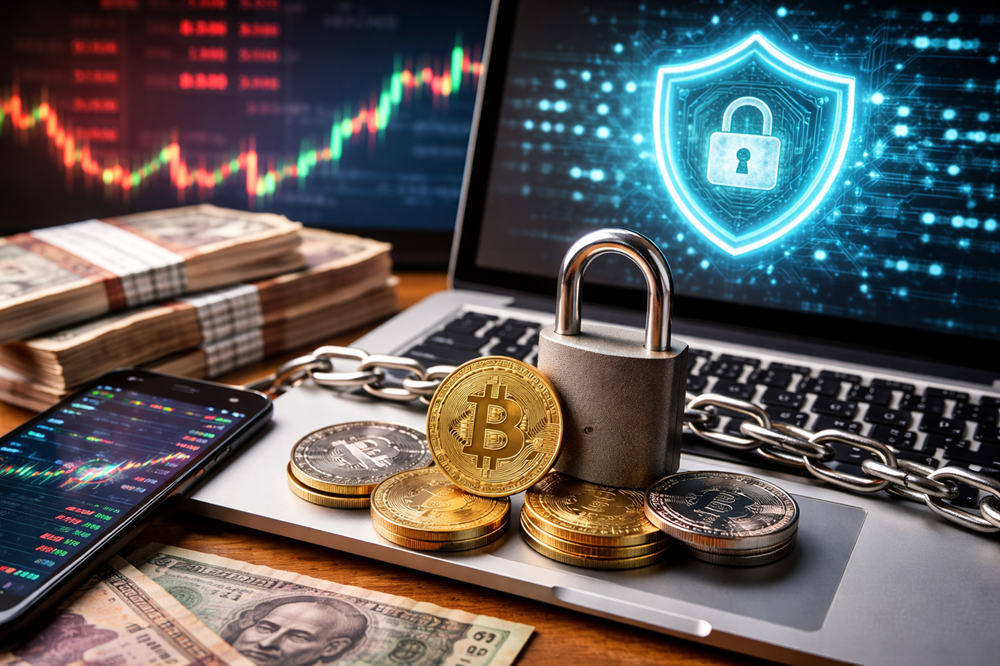
India’s rapidly expanding crypto industry has made significant progress on the regulatory front, but recent developments suggest that rules alone are not enough. As digital asset adoption grows, security vulnerabilities—ranging from exchange breaches to user-level fraud—have emerged as a critical risk. Regulatory compliance may define the legal boundaries of the market, yet it does little to prevent operational lapses, cyberattacks, and systemic weaknesses. For India’s crypto sector to mature sustainably, stronger security frameworks, industry-led standards, and technological resilience must complement regulation. Trust, not just legality, will ultimately determine the sector’s long-term credibility.
Regulation Has Created a Framework, Not a Shield
India’s approach to virtual digital assets has focused on oversight, taxation, and reporting requirements. These measures have brought a degree of clarity to a previously opaque market and have forced greater transparency among exchanges and service providers. However, regulation primarily addresses compliance and accountability after the fact. It does not inherently prevent hacks, data leaks, or internal control failures, which continue to pose material risks to investors and platforms alike.
Security Risks Are Growing With Adoption
As crypto usage expands, so does its attractiveness to cybercriminals. Exchanges manage large pools of digital assets, while individual investors often lack robust safeguards such as cold storage or multi-factor authentication. Phishing attacks, fake tokens, and social engineering scams have become more sophisticated, exploiting gaps in both technology and user awareness. These risks threaten to erode confidence, particularly among first-time investors entering the market.
The Case for Industry-Led Security Standards
A resilient crypto ecosystem requires more than statutory compliance. Industry participants must adopt higher benchmarks for cybersecurity, including regular third-party audits, real-time monitoring systems, and transparent incident reporting. Global best practices show that exchanges with strong internal controls and rapid response mechanisms are better equipped to contain damage when breaches occur. In India, voluntary security standards could help bridge the gap between regulation and real-world risk management.
Technology and Talent as Critical Enablers
Strengthening security is as much about people and processes as it is about technology. Investment in skilled cybersecurity professionals, ethical hackers, and advanced threat detection tools is essential. Artificial intelligence-driven monitoring, hardware-based key management, and secure custody solutions can significantly reduce vulnerabilities if implemented effectively and consistently across platforms.
Building Trust for Long-Term Growth
India’s crypto industry stands at a crossroads. Regulation has provided legitimacy, but security will determine sustainability. Without robust safeguards, each major incident risks setting the sector back years by undermining public trust. A coordinated push toward stronger security—led by exchanges, supported by technology providers, and reinforced by informed users—can ensure that India’s crypto ecosystem grows not just in size, but in resilience and credibility.
About Author