Dollar Dominance Faces a Digital Test as U.S.-Backed Stablecoins Enter the Global Arena
The U.S. dollar has weathered decades of economic shocks, fiscal strain, and repeated challenges to its supremacy as the world’s reserve currency. Its dominance has helped keep American borrowing costs relatively contained while reinforcing Washington’s geopolitical influence. Today, however, that position faces a new test from the rapid rise of digital currencies. In a notable shift, the U.S. political establishment—once openly skeptical of crypto—has begun embracing dollar-backed stablecoins as a strategic tool. Policymakers now see regulated digital dollars as a way to modernize finance while strengthening, rather than weakening, the dollar’s global role.
A Long-Standing Pillar Under Pressure
The dollar’s global dominance has survived pivotal moments, from its break with the gold standard to decades of widening U.S. fiscal deficits. Despite repeated predictions of decline, the currency has remained central to global trade, finance, and reserves. This status has allowed the United States to borrow at comparatively low costs and exert significant influence through financial sanctions.
Yet the emergence of digital alternatives has introduced a structural challenge. Advances in financial technology are reshaping how value is transferred, raising questions about whether traditional currency dominance can endure in a digital-first world.
From Skepticism to Strategic Embrace
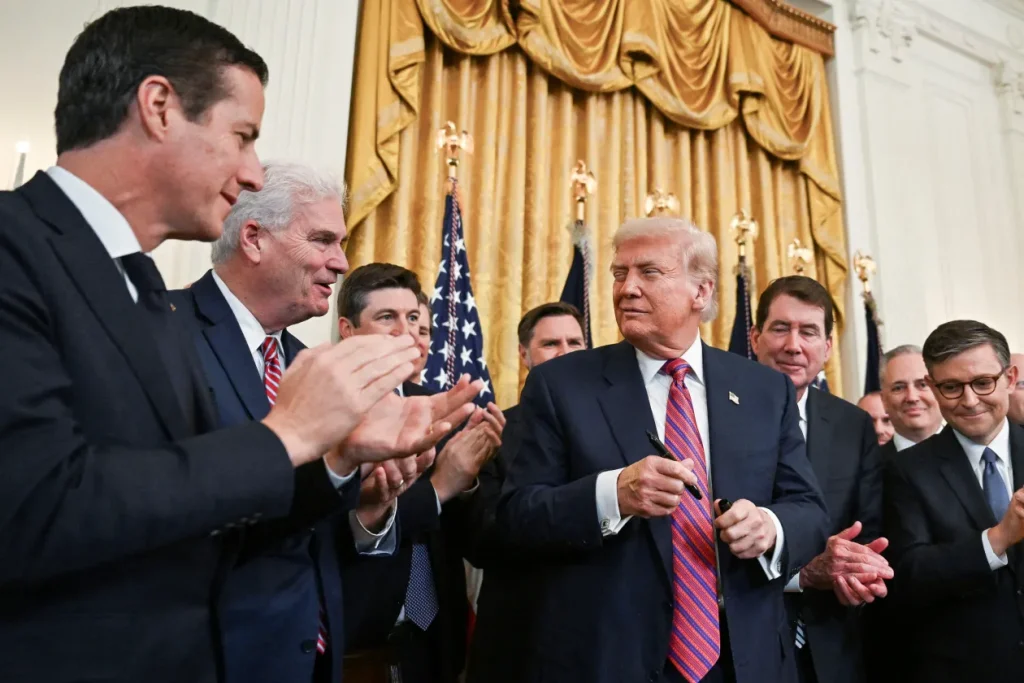
During his first presidential term, Donald Trump was openly critical of cryptocurrencies, frequently dismissing them as unreliable and speculative. That stance has since evolved. His family’s financial involvement in the sector and his administration’s policy direction reflect a broader reassessment in Washington.
Rather than opposing digital assets outright, policymakers have shifted focus toward regulated innovation. The passage of the Genius Act last summer marked a turning point, establishing a formal regulatory framework for U.S. dollar-backed stablecoins and signaling official recognition of their potential role in the financial system.
What Makes Stablecoins Different
Unlike unbacked cryptocurrencies, which are often subject to extreme price volatility, stablecoins are designed to maintain a fixed value by being backed primarily by cash and other highly liquid, dollar-denominated assets. First introduced roughly a decade ago, they aim to combine the efficiency of blockchain technology with the stability of traditional money.
For multinational corporations, stablecoins promise faster and cheaper cross-border transactions. For individuals without access to conventional banking, they offer a potential gateway to basic financial services. These practical use cases distinguish stablecoins from purely speculative digital assets.
Reinforcing the Dollar’s Global Role
If the stablecoin market expands significantly while remaining anchored to the U.S. dollar, it could increase global demand for U.S. government debt, which often backs these instruments. Such an outcome would reinforce the dollar’s reserve status rather than undermine it.
From a geopolitical perspective, dollar-denominated stablecoins could enhance the effectiveness of U.S. financial sanctions and strengthen Washington’s ability to shape international financial standards. Control over the rules governing digital money would extend American influence into an emerging financial frontier.
A Calculated Bet on the Future of Money
The U.S. government’s support for regulated stablecoins represents a calculated bet: that embracing digital finance under clear rules is safer than resisting it. By aligning innovation with the dollar, policymakers hope to ensure that technological change works in favor of existing economic power structures.
As digital finance accelerates, the success or failure of this strategy will play a critical role in determining whether the dollar’s dominance adapts to the digital age—or slowly erodes under the weight of global innovation.
About Author