Inside Eric Trump’s Crypto Playbook: Bold Gambits and Big Stakes
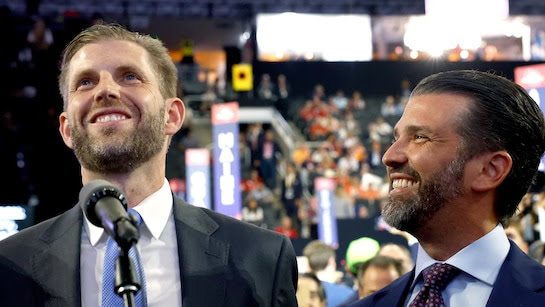
Eric Trump has rapidly repositioned himself from heir of a real‑estate dynasty to a high‑profile player in the global cryptocurrency arena. As co‑founder and chief strategy officer of American Bitcoin — and a key figure behind World Liberty Financial — he is spearheading a portfolio of ventures spanning bitcoin mining, stablecoins, and crypto‑treasury accumulation. With his firms now publicly listed and valued in the billions, Trump’s crypto push exemplifies the convergence of wealth, ambition and digital finance. But volatility, regulatory scrutiny and ethical questions cast a long shadow over what may yet become a landmark experiment in family‑driven crypto enterprise.
From Real Estate to Crypto: A Strategic Pivot
Eric Trump’s transition into the cryptocurrency space reflects a deliberate shift away from traditional family assets toward digital finance. In early 2025, he co‑founded American Bitcoin along with his elder brother and partnered with mining firm Hut 8. The move came after what he described as “debanking” pressures — in his view, a signal that conventional banking systems were becoming increasingly hostile to crypto‑users.
At a 2025 bitcoin conference in Hong Kong, Trump declared that banks faced obsolescence within the next decade if they failed to adapt. This framing suggests that his interest in crypto is as much ideological — a challenge to legacy finance — as it is commercial.
American Bitcoin: Mining, Treasury and Public Markets
American Bitcoin launched in March 2025, backed by Hut 8 and the Trump family, with a mission to become a “pure‑play” bitcoin miner and long-term holder. By mid‑2025, the company reportedly operated tens of thousands of mining machines across multiple facilities and had stockpiled a significant bitcoin reserve.
In May 2025, American Bitcoin agreed to merge with Gryphon Digital Mining in an all‑stock deal, retaining roughly 98 percent ownership for existing shareholders in the combined entity. The merged company began publicly trading on Nasdaq under the ticker “ABTC” — a landmark moment for the Trump‑linked crypto portfolio.
The public debut triggered a surge in valuation: at one point, Eric Trump’s holdings were estimated to be worth nearly US$950 million. While the price settled lower by day’s end, the feat marked his entry into billionaire‑status underpinned by crypto.
The company describes its strategy as dual‑fold: to mine bitcoin via its own facilities, and to accumulate additional bitcoin through opportunistic purchases — positioning itself as a “bitcoin treasury” entity.
Diversification: Stablecoins, Wallets and Beyond
Eric Trump’s ambitions are not confined to mining. Alongside American Bitcoin, he has a key role in World Liberty Financial (WLF), which recently introduced a U.S. dollar–backed stablecoin, USD1. The stablecoin is said to be backed by U.S. Treasury assets, dollar deposits and other cash equivalents — aiming to provide a reliable digital‑dollar alternative for institutional and cross‑border use.
In parallel, there’s been proliferation of associated crypto‑products — from meme coins to wallet services — under Trump‑affiliated branding, underlining a sweeping diversification of the family’s crypto footprint.
Rhetoric vs. Reality: Promises, Risks and Ethical Questions
Trump has publicly touted bitcoin as a “store of value,” predicting that its price could hit US$1 million in coming years — a bold forecast that underscores his bullish posture. He frames crypto as a democratizing force against traditional banking and vows that U.S. should “win the crypto race.”
Yet the aggressive expansion has triggered skepticism among market analysts. The meteoric valuation of American Bitcoin, despite limited track record and minimal employee base, invites scrutiny over whether the company’s market worth is rooted in fundamentals or speculative optimism.
Furthermore, the diversification into stablecoins, meme coins, wallets, and other digital‑asset offerings — often with faintly defined use cases — raises concerns about speculative excess, transparency and the potential for regulatory blowback.
Why It Matters: Crypto, Capital and Influence Collide
Eric Trump’s deep dive into crypto encapsulates a broader trend: wealth holders and legacy money expanding aggressively into digital assets, while seeking to shape the regulatory and public policy environment to their advantage. Given his family’s political prominence, this evolution blurs the line between capital interests and governance.
For investors and observers, the developments pose crucial questions: Can American Bitcoin evolve beyond hype to deliver sustainable performance? Will stablecoins like USD1 and broader products from World Liberty Financial withstand regulatory scrutiny? More broadly: What does the ascendancy of politically connected investors mean for the future of crypto markets, decentralization, and financial ethics?
As 2025 unfolds, Eric Trump’s crypto ventures may well become a defining case study of how traditional power and influence adapt — or reshape — the contours of the emerging digital‑asset economy.
About Author