Inside the Viral XRP Forecast: Why 5,000 Tokens Could Rival One Bitcoin by 2026
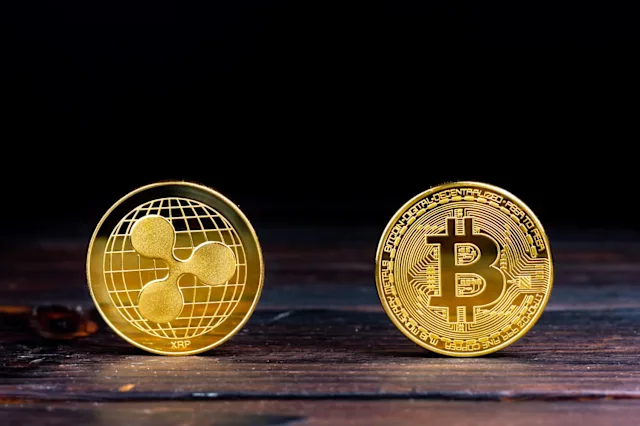
A widely circulated projection in the crypto market suggests that 5,000 XRP tokens could be valued on par with one Bitcoin by the end of 2026, implying an XRP price target of nearly Rs. 1,550 (USD 18.40). The forecast has ignited debate among investors, analysts, and market strategists, blending optimism with mathematical modeling rooted in market capitalization dynamics. While the claim is ambitious, it highlights broader expectations around XRP’s long-term adoption, regulatory clarity, and utility-driven growth. The discussion underscores how relative valuation models, rather than price alone, are shaping future narratives in digital assets.
The Claim Driving Market Buzz
The prediction that 5,000 XRP could equal the value of one Bitcoin has gained traction across crypto circles, largely due to its simplicity and bold implications. At its core, the comparison is not about XRP replacing Bitcoin but about relative valuation. Proponents argue that if Bitcoin trades near Rs. 77 lakh (USD 90,000) by late 2026, XRP reaching around Rs. 1,550 per token would mathematically support the equivalence.
This framing has resonated with retail investors searching for asymmetric upside in alternative cryptocurrencies.
Breaking Down the Rs. 1,550 XRP Target
The Rs. 1,550 price estimate stems from a straightforward calculation. Dividing a hypothetical Bitcoin price of Rs. 77 lakh by 5,000 yields an XRP valuation close to Rs. 1,540–1,560, or roughly USD 18.40. Advocates emphasize that this model relies on proportional value, not absolute dominance.
To reach this level, XRP’s total market capitalization would need to expand significantly, placing it among the most valuable digital assets globally—well beyond its historical peaks.
Market Capitalization and Supply Realities
Unlike Bitcoin, which has a capped supply of 21 million coins, XRP’s circulating supply is substantially larger. This structural difference makes price comparisons misleading without considering market capitalization. At Rs. 1,550 per XRP, the network’s valuation would run into tens of trillions of rupees, rivaling the largest crypto assets and even major global corporations.
Analysts note that such growth would require sustained institutional adoption, high transaction volumes, and a clear use case that scales globally.
Adoption, Utility, and Regulatory Variables
Supporters of the forecast point to XRP’s focus on cross-border payments and liquidity solutions as potential catalysts. If large financial institutions increasingly adopt blockchain-based settlement systems, XRP could benefit from higher demand tied to real-world utility rather than speculation alone.
However, regulatory clarity remains a decisive factor. Any favorable resolution of long-standing legal and compliance questions could unlock institutional participation, while adverse developments could cap upside potential.
Skepticism and Risk Considerations
Not all market observers are convinced. Critics argue that equating XRP’s future value to Bitcoin underestimates Bitcoin’s entrenched role as a store of value and overestimates the pace of XRP adoption. They caution that viral predictions often overlook macroeconomic risks, competitive technologies, and shifting investor sentiment.
From a risk-adjusted perspective, such projections should be viewed as scenario-based possibilities rather than probabilistic outcomes.
What the Prediction Ultimately Represents
Beyond the numbers, the viral claim reflects a broader shift in how crypto investors think about value. Relative pricing models, narrative-driven forecasts, and long-term adoption stories are increasingly influencing market psychology.
Whether or not XRP reaches Rs. 1,550 by 2026, the debate highlights a maturing market that is beginning to weigh utility, scale, and comparative valuation alongside price speculation. For investors, the forecast serves less as a guarantee and more as a lens through which future possibilities are being explored.
About Author