Stablecoins at a Crossroads: Have Digital Dollars Truly Moved Beyond Experimentation?
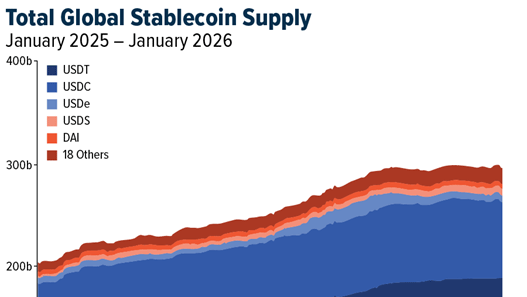
Stablecoins, once viewed as experimental tools within the cryptocurrency ecosystem, are increasingly being positioned as foundational components of digital finance. Pegged to fiat currencies and designed to minimize volatility, these blockchain-based assets have grown in transaction volume, cross-border utility, and institutional attention. Yet questions remain about scalability, regulatory oversight, reserve transparency, and systemic risk. A comprehensive SWOT analysis reveals an industry transitioning from speculative use cases toward real-world financial integration. While adoption metrics show meaningful growth, the long-term sustainability of stablecoins depends on regulatory clarity, technological resilience, and trust in the financial structures that underpin their value.
Strengths: Stability Meets Blockchain Efficiency
Stablecoins derive their primary strength from their ability to combine the price stability of traditional currencies with the operational efficiency of blockchain technology. By maintaining a peg—often to the U.S. dollar—these digital assets enable near-instant settlement, reduced transaction costs, and global accessibility.
For traders, stablecoins provide a safe harbor during market volatility without requiring conversion back into traditional banking systems. For businesses, they offer programmable payments and cross-border transfers that bypass conventional intermediaries. This functional blend of stability and speed has positioned stablecoins as a practical bridge between decentralized finance and traditional monetary systems.
Weaknesses: Transparency and Structural Risks
Despite their promise, stablecoins face persistent scrutiny over reserve backing and operational transparency. The credibility of any stablecoin rests on the quality and liquidity of assets supporting its peg. Inadequate disclosures or opaque reserve management can undermine user confidence and trigger destabilizing redemptions.
Additionally, technological vulnerabilities—ranging from smart contract risks to cybersecurity threats—pose operational hazards. Unlike bank deposits, many stablecoins lack formal deposit insurance or lender-of-last-resort mechanisms, exposing holders to potential losses during systemic stress.
Opportunities: Institutional Integration and Financial Inclusion
The growing involvement of payment companies, fintech platforms, and traditional financial institutions signals a new phase of stablecoin adoption. These assets are increasingly being explored for use in remittances, treasury operations, and tokenized financial products.
Emerging markets present another avenue of opportunity. In regions with volatile local currencies or limited banking access, stablecoins can serve as alternative stores of value and mediums of exchange. Their digital-native nature also makes them well-suited for integration with decentralized applications and next-generation financial services.
Threats: Regulation and Competitive Pressures
Regulatory developments represent both the greatest uncertainty and the most significant external threat. Governments worldwide are evaluating frameworks to oversee stablecoin issuance, reserve requirements, and consumer protections. Stricter compliance obligations could raise operational costs or limit certain business models.
Competition is also intensifying. Central bank digital currencies (CBDCs) and regulated tokenized deposit systems may challenge the role of privately issued stablecoins. If public-sector digital currencies offer similar efficiency with stronger legal backing, market share could shift.
Market Evolution and Scale
Transaction volumes involving stablecoins have expanded rapidly in recent years, with usage extending beyond trading into payments and decentralized finance applications. However, true scalability is not measured solely by volume. Long-term viability depends on maintaining price stability during stress events, integrating with regulatory systems, and ensuring interoperability with traditional financial infrastructure.
Industry analysts note that while stablecoins have surpassed their experimental origins, they have not yet reached full systemic maturity. Their evolution now hinges less on technological feasibility and more on governance, oversight, and institutional trust.
Outlook: From Innovation to Infrastructure
Stablecoins are transitioning from niche crypto instruments to components of broader digital financial architecture. The next stage of growth will likely be shaped by regulatory clarity, improved transparency standards, and deeper collaboration with established financial institutions.
Whether they ultimately function as global payment rails or remain specialized digital settlement tools, stablecoins have clearly advanced beyond early experimentation. Their future role will be determined by how effectively the industry balances innovation with financial stability and public accountability.
About Author