The Economics of Crypto Mining: Infrastructure, Energy Markets and Digital Capital Formation
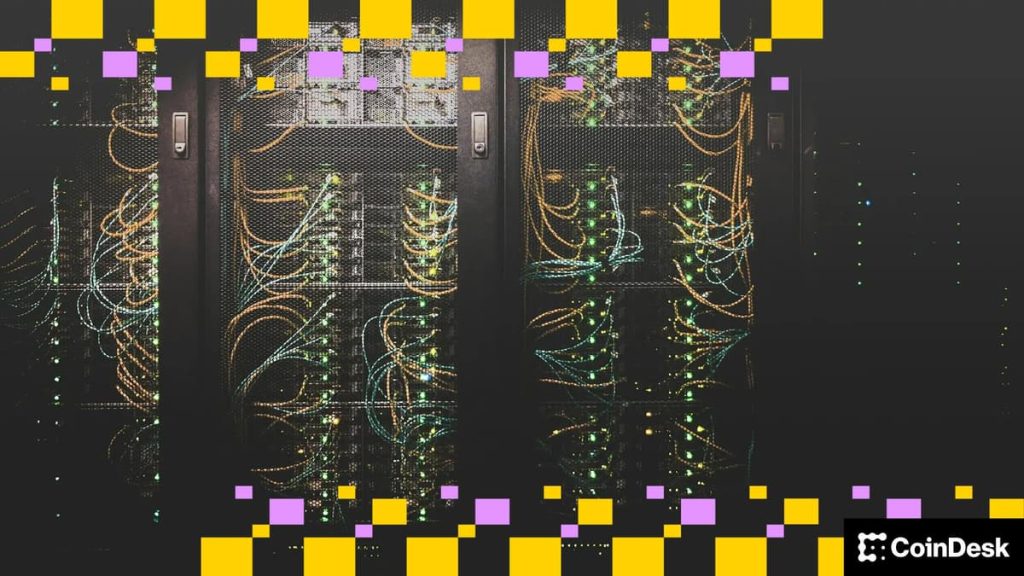
Cryptocurrency mining has evolved from a niche technological experiment into a capital-intensive global industry that intersects with energy markets, financial systems and regulatory policy. Once dominated by hobbyists operating from personal computers, mining is now driven by industrial-scale data centers deploying specialized hardware to secure blockchain networks. The process relies on complex cryptographic computations that validate transactions and mint new digital assets. However, its rapid expansion has raised concerns regarding energy consumption, environmental sustainability and market volatility. As institutional capital enters the sector, crypto mining increasingly resembles traditional commodity extraction—defined by scale, operational efficiency and geopolitical influence.
Understanding the Foundations of Crypto Mining
Crypto mining is the computational process that validates and records transactions on blockchain networks such as Bitcoin. At its core, mining ensures the integrity and decentralization of distributed ledgers.
Miners compete to solve complex mathematical puzzles using high-performance computing systems. The first participant to solve the cryptographic equation earns the right to append a new block of transactions to the blockchain and receives a block reward—newly issued cryptocurrency plus transaction fees.
This mechanism, known as Proof of Work, secures the network against fraud and double-spending. It also creates predictable issuance schedules, which underpin digital asset scarcity models.
From Hobbyists to Industrial Operators
In Bitcoin’s early years, mining required little more than a standard CPU. As competition intensified, miners adopted Graphics Processing Units (GPUs), followed by Application-Specific Integrated Circuits (ASICs)—custom-built hardware optimized exclusively for mining algorithms.
Today’s operations resemble energy-intensive data centers rather than informal setups. Facilities house thousands of ASIC machines operating continuously to maximize hash rate output. Capital expenditures for large-scale mining farms can reach hundreds of millions of rupees, factoring in land acquisition, cooling systems and grid interconnections. Institutional investors now treat mining infrastructure as a long-term asset class. Publicly traded mining companies report earnings, manage treasury reserves in digital assets and hedge exposure through derivatives markets.
Energy Consumption and Environmental Debate
Energy usage remains the most controversial dimension of crypto mining. Bitcoin’s global network consumes electricity comparable to that of some mid-sized countries. Critics argue this contributes to carbon emissions and strains power grids.
However, industry participants counter that mining incentivizes renewable energy development. Many operators locate facilities near surplus hydroelectric, wind or solar capacity where electricity costs are lower. In regions with stranded energy—such as remote natural gas fields—mining converts otherwise wasted resources into economic value.
The debate is shifting from absolute energy consumption to energy source composition. Policymakers increasingly focus on whether mining integrates into sustainable energy frameworks rather than whether it consumes electricity at all.
Mining Economics and Revenue Volatility
Mining profitability depends on three primary variables: cryptocurrency price, network difficulty and energy cost.
Network difficulty adjusts automatically to maintain consistent block production times. When more miners join the network, competition increases, reducing individual reward probabilities. Conversely, declining participation can temporarily improve margins for remaining operators.
Revenue is inherently volatile because it tracks cryptocurrency market cycles. During bullish phases, elevated token prices significantly boost mining returns. During downturns, margins compress sharply, particularly for operators with high fixed electricity contracts.
Sophisticated firms manage risk through forward contracts, treasury diversification and geographic arbitrage in energy sourcing.
Regulatory and Geopolitical Considerations
Governments worldwide vary widely in their stance toward crypto mining. Some jurisdictions encourage mining investment to stimulate economic development, particularly in regions with excess power generation. Others restrict or ban operations due to environmental or capital control concerns.
Regulatory clarity influences capital allocation decisions. Inconsistent policy frameworks can deter infrastructure investment, while predictable oversight attracts institutional participation.
The geopolitical dimension is also significant. Hash rate concentration in a single country can create systemic vulnerabilities. Consequently, the mining industry has gradually diversified across North America, Central Asia and parts of Europe.
Technological Evolution and the Future
Technological innovation continues to reshape the sector. Advanced cooling systems, including immersion cooling, improve hardware efficiency and extend equipment lifespan. Chip manufacturers compete to design ASIC models with lower energy consumption per terahash.
Meanwhile, some blockchain networks have transitioned to alternative consensus mechanisms. For example, Ethereum shifted from Proof of Work to Proof of Stake, reducing its energy footprint substantially.
Bitcoin, however, remains committed to Proof of Work, reinforcing mining’s central role in its security model.
Conclusion
Crypto mining has matured into a sophisticated industry at the intersection of technology, finance and energy economics. It mirrors commodity extraction markets in capital intensity and cyclical volatility, yet it remains distinct in its digital-native structure.
Whether viewed as an environmental burden or an economic catalyst, mining continues to anchor the cryptocurrency ecosystem. Its future will likely depend on technological efficiency gains, regulatory evolution and global energy transition strategies.
About Author