Bitcoin Still Seen as a Speculative Asset as Institutional Skepticism Persists
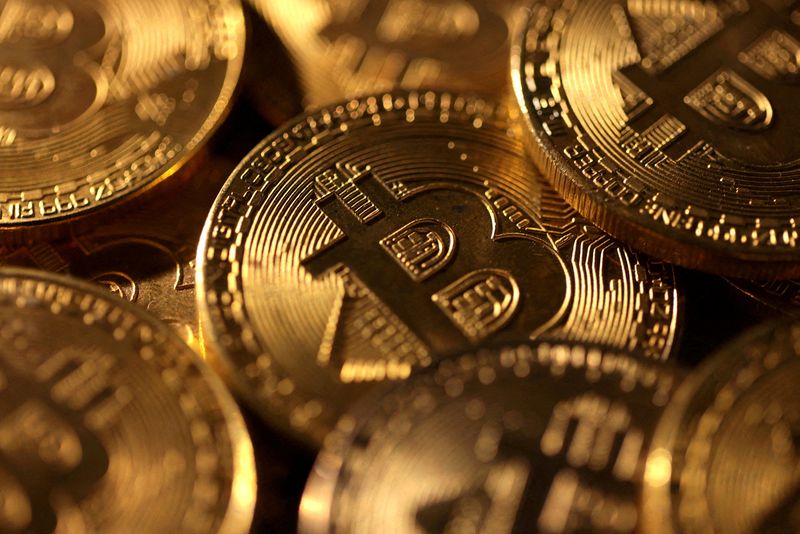
Bitcoin continues to attract global attention, but not all institutional investors are convinced of its maturity as a financial asset. According to a leading quantitative equity perspective from a major asset management firm, Bitcoin remains closer to a speculative instrument than a fully integrated store of value. Despite its growing market capitalization, increasing adoption and expanding ecosystem, the digital currency is still viewed as lacking the stability, cash-flow linkage and economic utility that traditional assets offer. The assessment underscores a broader debate within capital markets about whether Bitcoin is evolving into “digital gold” or remains a high-volatility vehicle driven largely by sentiment and liquidity cycles.
Institutional View: Caution Over Conviction
From a quantitative investment standpoint, Bitcoin continues to occupy an uncomfortable middle ground. While its price action has captured investor imagination, quantitative models prioritize predictability, correlation stability and long-term fundamentals. In that context, Bitcoin is often flagged as an outlier.
Analysts argue that Bitcoin’s valuation remains heavily narrative-driven, with limited ties to measurable economic output. Unlike equities, it generates no earnings. Unlike bonds, it offers no yield. This makes it difficult to integrate into systematic portfolios designed to optimize risk-adjusted returns over long horizons.
Volatility Remains the Defining Feature
One of the most persistent challenges for Bitcoin is volatility. Sharp price swings, often triggered by macroeconomic signals, regulatory commentary or liquidity shifts, continue to dominate its trading profile. Quantitative strategies typically penalize such instability, particularly when it does not reliably diversify broader portfolio risk.
While proponents argue that volatility will decline with scale and adoption, institutional data suggests that Bitcoin still behaves more like a speculative instrument than a defensive hedge during periods of stress.
Liquidity and Sentiment Cycles
Liquidity conditions play a central role in Bitcoin’s performance. When global financial conditions loosen, speculative assets tend to benefit disproportionately. Conversely, tighter monetary environments often expose Bitcoin’s sensitivity to risk-off sentiment.
From a quantitative lens, this cyclical dependence reinforces the view that Bitcoin is still in a price-discovery phase rather than a structurally embedded asset class. Its performance often mirrors investor appetite for risk rather than acting as an independent macro hedge.
The ‘Digital Collectible’ Argument
Some institutional strategists have likened Bitcoin to a digital collectible — valuable largely because participants agree it is valuable. This comparison does not dismiss Bitcoin outright but places it closer to alternative assets whose prices are driven by scarcity narratives rather than intrinsic cash flows.
Such assets can perform exceptionally well in certain cycles, but they pose challenges for disciplined portfolio construction, especially for pension funds and long-term allocators bound by fiduciary constraints.
What Would Change the Narrative
For Bitcoin to transition from speculative curiosity to institutional staple, analysts say several developments would be required. These include reduced volatility, clearer regulatory frameworks, deeper integration with real-world economic activity and more consistent behavior across market cycles.
Until then, many quantitative investors remain on the sidelines, observing rather than allocating at scale.
Conclusion
Bitcoin’s evolution is far from complete. While it has undeniably reshaped conversations around money, technology and decentralization, a significant segment of institutional capital still views it as an immature asset. For now, Bitcoin occupies a unique space — influential, widely debated, yet not fully embraced by models that prioritize stability over storytelling. Whether it graduates into a core financial instrument or remains a high-risk satellite asset will depend on how it behaves when speculation fades and fundamentals are put to the test.
About Author